
Team of Teams- working in complex systems
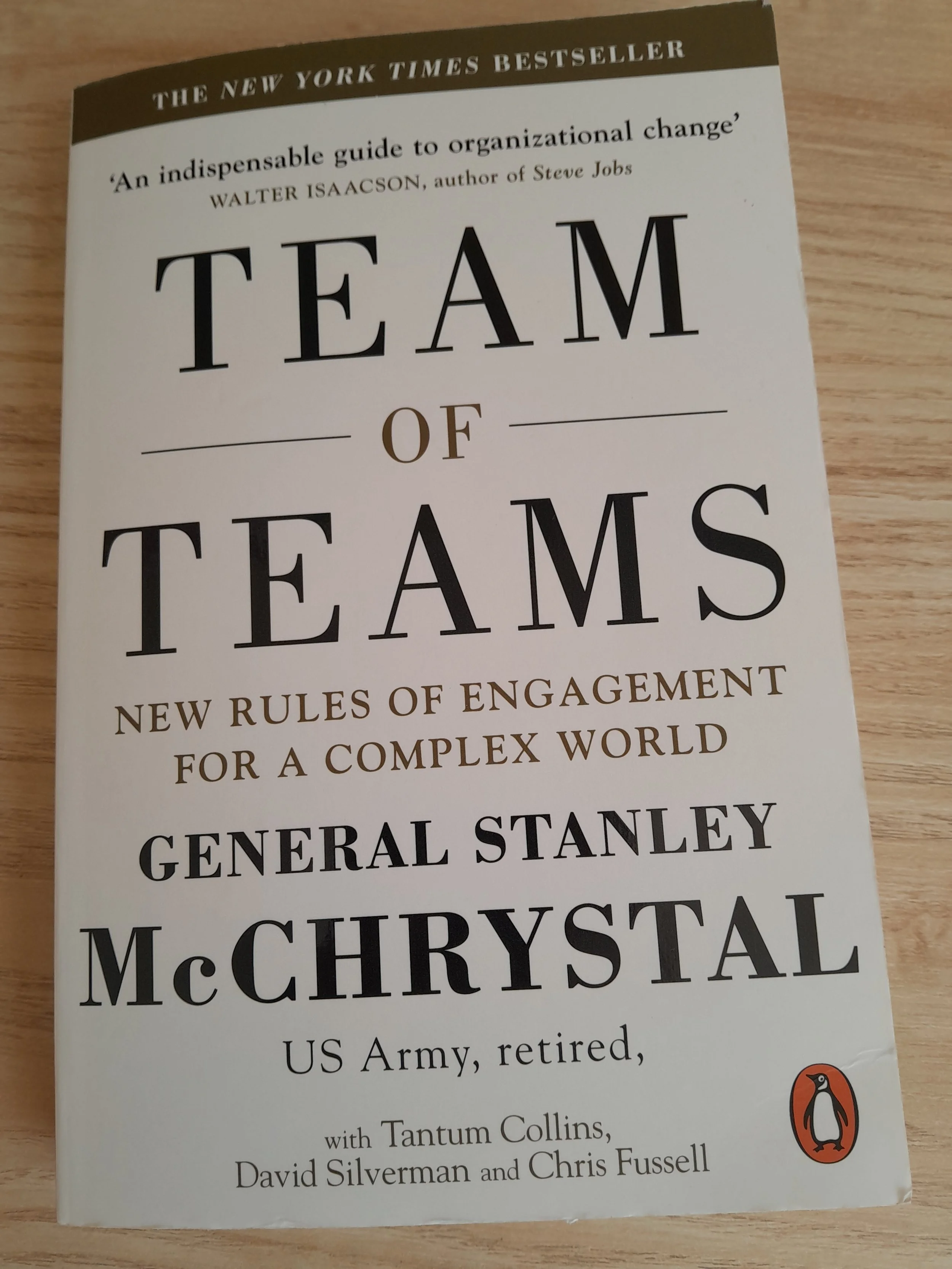
What might a book about the Iraq war, written by a US General have that’s relevant to the charity sector? Ten years ago I read the book “Team of Teams”. It made a big impression on me and ten years on I still think about it often.
I have spent the last ten years trying to find someone else who had read it to talk to about it. Finally the Consultants For Good book group selected it for their April read. I read it again, with some trepidation in case it wasn’t as good as I remembered. I wasn’t disappointed and the others in the group said they would never have picked it up, but they were glad they had.
The book is written by General Stanley McChrystal about his time leading the Joint Special Operations Task Force in Iraq in 2003. The hierarchical working of the military could not compete with the decentralised nature of al-Qaeda.
The book tells the story of how a US military General moved from the conventional siloed working, where information was shared only on a need to know basis to one based on hugely transparent communication and decentralised decision making. Not an easy thing to achieve.
There is lots about managing in complexity, especially in large organisations, which is even more relevant today than it was when I first read it. The world is changing at an ever greater pace and we need to be able to respond quickly. No single team can deliver everything that is needed. Old fashioned siloed working, where every team or organisation thinks they are the most important doesn’t work. Every organisation and team within a large organisation needs to understand the big picture, where they can contribute and to value the contributions of others.
The examples in the book were mostly from big corporations or the military. But I think the key messages are equally relevant to charities. Large charities are just as prone to working in silos, to every team fighting for its own resources, rather than looking at the big picture. Many charities work in a competitive commissioning environment that makes collaboration difficult. They work in complex systems with statutory bodies that don’t always understand the full value of what the voluntary sector can offer. How else will we deliver the government’s vision of neighbourhood health without a team of teams, including the voluntary and community sector?
It’s a book I would recommend to anyone with an interest in leading in complexity. Given the author I didn’t expect a nuanced analysis of the Iraq war. But I valued the insights about the role of a leader in a complex situation where decentralised decision making is essential for success and what it takes to build a team of teams.
What will it take for us to create a team of teams in in the face of today’s complex challenges?